Why WordPress sites get hacked and how to prevent it

Table of Contents
Why Do WordPress Sites Get Hacked
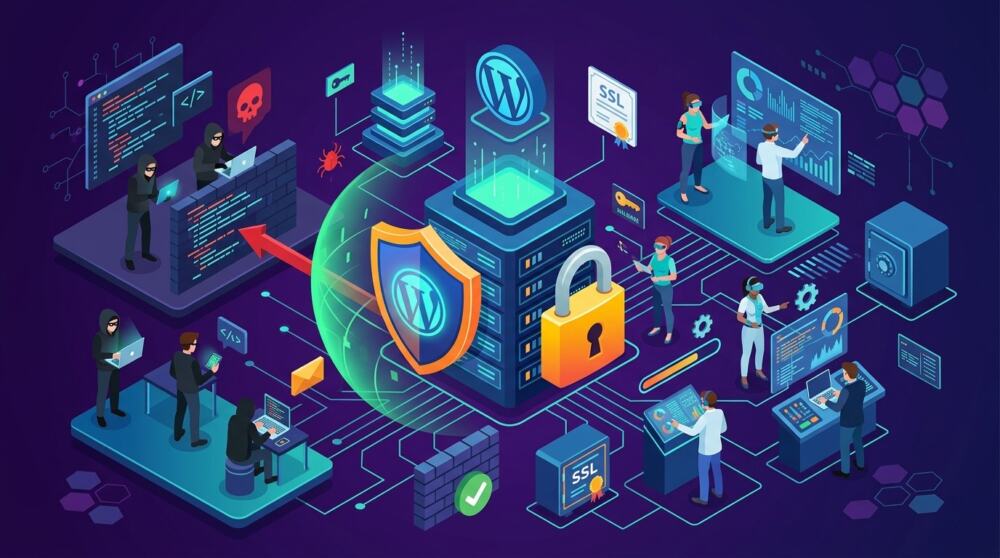
WordPress sites are hacked mainly due to outdated plugins and themes, weak passwords, and the lack of a firewall. WordPress is the most used website system in the world, which also makes it the most targeted system for automated attacks. The good news: most of these doors are easily closed, if you know where to look.
Why are WordPress sites such a frequently targeted goal?
Not because WordPress is inherently insecure. But because it is everywhere. Over 40% of the websites on the internet run on WordPress, which means that an attacker who finds a vulnerability in a popular plugin can try the same method on tens of thousands of sites, automatically, without additional effort. You are not attacked because someone specifically chose you. You are attacked because bots are constantly scanning the internet, looking for doors left unlocked.
What are the most common attack doors?
Outdated plugins and themes
This is where most problems arise. Every plugin or theme can have a vulnerability discovered at some point, and developers release an update that fixes it. If you don’t install the update, the door remains open, even though the solution already exists.
Weak or reused passwords
A simple password or one used on other accounts is like a key you left under the doormat. Brute-force attacks try thousands of combinations per second, and a weak password yields quickly.
Lack of a firewall
A firewall filters suspicious traffic before it reaches your site. Without it, any request, including those from malicious bots, reaches the core of your site directly, without any barrier.
Insecure or poorly configured hosting
Sometimes the problem is not the site itself, but the environment in which it runs. Cheap hosting, with no isolation between accounts or basic protection, can expose your site to vulnerabilities of other sites on the same server.
Lack of Two-Factor Authentication (2FA)
Even if the password is guessed or stolen, 2FA adds an extra step that the attacker cannot bypass without access to your phone.
What exactly happens if your site is hacked?
The consequences do not stop at an annoying message on the screen. A compromised site can mean:
- Financial losses, especially if you have an online store and the site is down during a campaign
- Theft of your data or your clients’ data
- Malicious redirects that send your visitors to other, often dangerous, sites
- Blacklisting in Google, which means your site disappears from search results or appears with a warning
- Damaged reputation, difficult to recover, especially if clients find out their data was exposed
How do you know if your site is vulnerable right now?
The simplest way is to scan your site with a dedicated tool that checks which themes and plugins you have installed, which are outdated, and where there are already known security risks. You don’t have to be technical for this. Haipeweb offers a free vulnerability scanner that shows you exactly where you stand in a few minutes, no credit card required, no strings attached.
How to prevent an attack, step by step
- Constantly update WordPress, the theme and all plugins, not just when you remember
- Use strong passwords and unique ones for each account, ideally generated automatically
- Enable 2FA at login, as an extra security step
- Install a firewall that filters suspicious traffic before it reaches the site
- Make regular backups, so you can quickly return to a working version if something goes wrong
- Monitor the site, so you know about a problem before your clients notice it
If all this sounds like a lot to constantly keep track of, this is exactly where a maintenance or security package steps in: someone looks out for you, so you can focus on your business.
Frequently Asked Questions
How often should I update my WordPress site?
Ideally, you check for updates weekly and install them tested, not immediately and without verification. An untested update can break the site just as easily as an outdated vulnerability.
If I have a known and popular plugin, am I safe?
Not necessarily. Even popular plugins have vulnerabilities discovered periodically. The popularity of a plugin is not a guarantee of safety, but one more reason to always update it to the latest version.
Is a firewall enough to be completely protected?
A firewall is an important part, but not the only one. Real security means a combination of up-to-date updates, strong passwords, 2FA, backups, and constant monitoring, not just one isolated solution.
How do I know if my site has already been compromised?
Common signs include: suddenly slow speed, unexpected redirects, files you don’t recognize, or a warning from Google in search results. The Haipeweb free scanner helps you quickly check the current status of the site.
How much does it cost to prevent an attack, compared to how much it costs to fix one that has already happened?
Prevention, through constant maintenance and security, costs significantly less than recovery after an attack, which may involve malware cleanup, lost sales during downtime, and sometimes recovering reputation in front of clients.
Want to see exactly where your site stands right now? Scan your site for free and get a clear report, without technical jargon, in a few minutes.
Recommended Tools to Secure Your WordPress Site
If you’re managing a WordPress site, having the right tools in your arsenal is crucial. Here are some of the most effective solutions:
- Haipeweb Security Scanner: Our very own free tool! Create a free account and scan your website instantly for outdated plugins, known vulnerabilities, and security risks. No technical jargon, just clear actionable steps.
- Wordfence Security: One of the most popular firewall and malware scanners for WordPress. It actively blocks malicious traffic and alerts you if any core files have been modified.
- Solid Security (formerly iThemes): A great all-in-one plugin that enforces strong passwords, locks out bad users, and hardens your WordPress database against SQL injections.
- UpdraftPlus: Security isn’t just about blocking attacks; it’s also about recovery. UpdraftPlus is a top-tier backup plugin that ensures you can restore your site with a single click if disaster strikes.
While plugins are helpful, the absolute best security measure is managed maintenance. By letting experts handle your updates and firewalls, you completely eliminate the risk of a plugin conflict breaking your site during a security update.
We know that navigating why do wordpress sites get hacked can sometimes be a headache, but we’re here to help. Whether you want to leverage WordPress or build something entirely custom, it pays to do it right. Just drop us a message, and let’s talk about how we can get your project running smoothly.